

Currently Empty: 0 CFA
Kubi's Edu Insight — Education and Professional Development
5 Powerful Reasons Emotional Intelligence Matters in Teaching Today
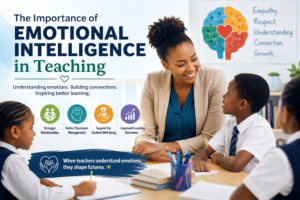
Teaching is more than delivering lessons and completing syllabuses. It is a deeply human profession that involves understanding learners, managing relationships, responding to emotions, and creating environments where students feel safe, respected, and motivated to learn.
In today’s classrooms, academic knowledge alone is no longer enough for effective teaching. A teacher may know their subject very well but still struggle to connect with learners emotionally. On the other hand, teachers who demonstrate emotional intelligence in teaching can inspire confidence, build trust, manage classroom behaviour effectively, and positively influence students beyond academics.
As modern education continues to evolve, emotional intelligence has become one of the most essential qualities of successful teachers.
What Is Emotional Intelligence in Teaching?
Emotional intelligence in teaching refers to a teacher’s ability to understand, manage, and respond effectively to emotions — both their own emotions and the emotions of their students.
Emotional intelligence consists of four major competencies:
- Self-awareness
- Self-management
- Social awareness
- Relationship management
Self-aware teachers recognise their emotional triggers and biases. Instead of reacting impulsively, they reflect before responding. Self-management helps teachers remain calm during stressful classroom situations. Social awareness allows teachers to recognise when learners are anxious, discouraged, or emotionally distressed. Relationship management helps educators build trust, respect, and positive classroom environments.
7 Powerful Reasons Emotional Intelligence in Teaching Matters Today
1. Emotional Intelligence in Teaching Improves Teacher-Student Relationships
Students learn better when they feel respected, valued, and understood. Teachers who practise emotional intelligence in teaching create stronger relationships by:
- Listening attentively
- Speaking respectfully
- Encouraging participation
- Showing patience
- Treating students fairly
Positive teacher-student relationships increase classroom cooperation, confidence, and academic engagement. Students who feel emotionally safe are more likely to participate actively and ask questions without fear.
2. Emotional Intelligence in Teaching Helps Manage Classroom Behaviour
Classroom management remains one of the biggest challenges teachers face. Emotionally intelligent teachers respond calmly rather than emotionally during difficult situations.
Instead of reacting with uncontrolled anger, they:
- Identify the causes of student behaviour
- Use constructive discipline methods
- Communicate expectations clearly
- Resolve conflicts peacefully
Fear may control behaviour temporarily, but respect creates long-term discipline and cooperation.
3. Emotional Intelligence in Teaching Supports Students’ Emotional Well-Being
Many learners today face emotional challenges that affect learning, including:
- Anxiety
- Depression
- Peer pressure
- Academic stress
- Family instability
- Social isolation
Teachers who demonstrate emotional intelligence in teaching can identify signs of emotional distress early. Sometimes a simple conversation, encouragement, or supportive attitude from a teacher can positively influence a student’s life. Teachers often become role models, mentors, and emotional support systems for learners.
4. Emotional Intelligence in Teaching Reduces Teacher Burnout
Teaching is emotionally demanding. Teachers must handle:
- Student behaviour
- Administrative pressure
- Parents’ expectations
- Examination stress
- Heavy workloads
Without emotional balance, stress can become overwhelming. Teachers with strong emotional intelligence often manage stress better, remain calmer, and maintain healthier professional relationships.
According to research from Harvard Graduate School of Education, emotional well-being plays a major role in effective teaching and learning environments.
5. Emotional Intelligence in Teaching Encourages Better Communication
Communication is central to effective education. Emotionally intelligent teachers communicate respectfully and clearly with:
- Students
- Parents
- Colleagues
- School administrators
Good communication reduces misunderstandings and strengthens collaboration. Learners also feel more comfortable expressing themselves in classrooms where communication is open and respectful.
Essential Emotional Intelligence Skills in Teaching
Self-Awareness
Teachers should understand their emotions, strengths, weaknesses, and emotional triggers. Self-awareness helps educators respond intentionally rather than emotionally.
Self-Control
Professional teachers must learn to regulate emotional reactions even when students become difficult, distracted, or disrespectful.
Empathy
Empathy allows teachers to understand and share the feelings of learners. Empathetic teachers:
- Listen carefully
- Understand student struggles
- Avoid unnecessary humiliation
- Encourage learners compassionately
Motivation
Emotionally intelligent teachers remain committed even during difficult moments. Their passion and consistency often inspire learners positively.
Social Skills
Teaching requires strong interpersonal skills, including:
- Relationship building
- Collaboration
- Conflict resolution
- Effective communication
- Positive leadership
Education depends heavily on healthy human interaction.
The Future of Emotional Intelligence in Teaching
Teacher training institutions should not focus only on pedagogy and subject mastery. Emotional intelligence training should also become part of teacher education programmes.
Future teachers should receive training in:
- Classroom psychology
- Emotional management
- Child development
- Conflict resolution
- Communication skills
- Mental health awareness
Educational leaders should also create school environments that support emotional well-being for both teachers and students through:
- Counselling services
- Positive school culture
- Teacher support systems
- Respectful leadership
- Mental health programmes
Research and educational frameworks from UNESCO and CASEL Framework continue to emphasise the importance of emotional and social learning in modern education.
Conclusion
Emotional intelligence in teaching is one of the most important qualities of effective educators in today’s world. Teaching is not simply the transfer of knowledge; it is the shaping of human lives.
Students learn better when they feel respected, supported, and understood. Emotionally intelligent teachers create positive classrooms where learners grow academically, socially, and emotionally. They communicate effectively, manage stress professionally, build stronger relationships, and inspire confidence in learners.
As education continues to evolve, schools must move beyond focusing only on academic performance. Human connection, empathy, emotional balance, and psychological support are becoming equally important in successful teaching and learning. Great teachers do not only educate minds, they also shape character, confidence, and emotional growth.
A Call to Reflection
Teachers shape young people during formative years. The knowledge matters. But it is the relationship, the feeling that a teacher believes in you, understands you, and cares about your growth that often determines whether a student persists through difficulty or gives up.
Emotional intelligence in teaching is not soft sentiment. It is practical wisdom. It is the difference between a classroom where students fear failure and one where they embrace it. It is the difference between young people who see learning as imposed obligation and those who discover it as joy.
The most powerful teaching happens when competence meets compassion. Emotional intelligence makes that possible.